
This is the suggested answer to the Bowman’s Strategy Clock exercise on Colorado Ricardo Mountain Bikes.
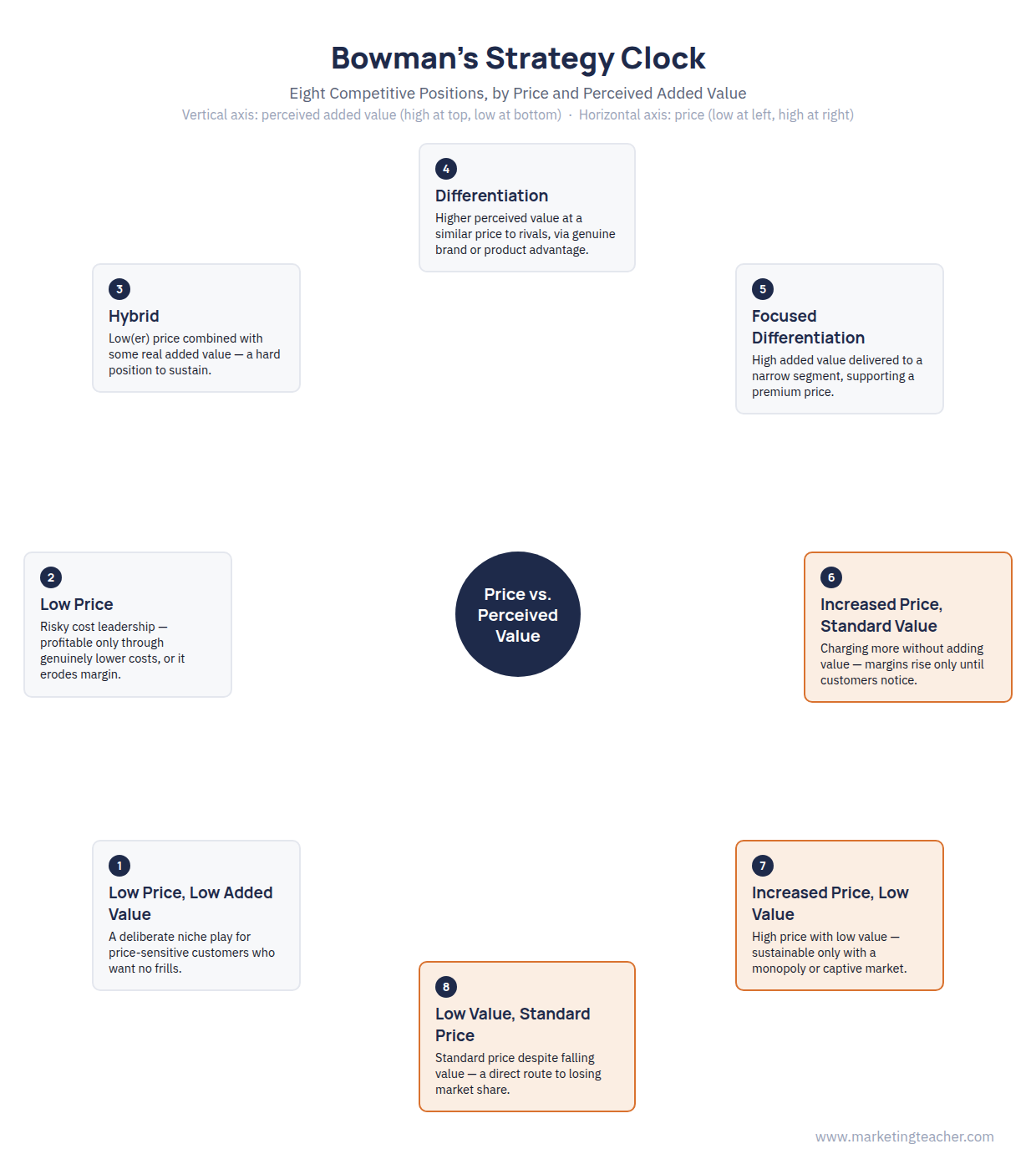
Where Colorado Ricardo Sits Today
Colorado Ricardo charges a premium price built on its durability reputation and hand-built story – broadly a differentiation position on the clock. But three years of falling sales suggest the wider market’s perception of that added value has not kept pace with the price being charged, which risks drifting toward the “loss of market share” position: a price that no longer feels justified once cheaper, adequate alternatives are available.
Where It Should Aim to Move
Rather than cutting price to compete broadly, the better move is toward focused differentiation – keeping the premium price, but aiming it deliberately at a narrower, well-defined niche (serious off-road riders who genuinely value ruggedness and the brand’s story) where that added value is clearly recognised, rather than trying to justify the price to the wider cycling market.
This mirrors the recommendation in the Generic Strategies exercise – both frameworks point toward the same focused differentiation strategy for Colorado Ricardo.
The slides, worksheet, lesson plan and poster for this lesson are free to download and free to use in your course — no sign-up, no permission needed. See the teacher resources →
Assign this lesson to your class:
Using Canvas, Blackboard or Moodle? Copy the link and paste it into your course page or assignment. More ways to add lessons to your LMS.

