
What Is Atmospherics?
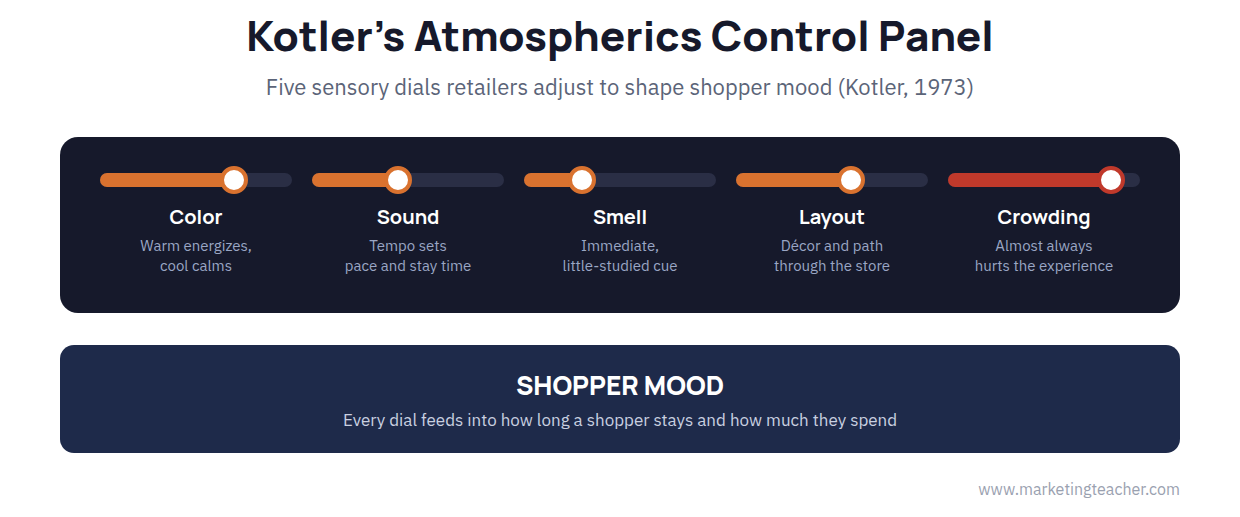
Kotler (1973) coined the term atmospherics to describe the deliberate design of a physical or online space to produce specific emotional effects that increase the likelihood of a purchase. Rather than treating a store’s décor, lighting, sound and layout as incidental, atmospherics treats them as a marketing tool in their own right, every bit as intentional as a price or a promotion. A store’s atmosphere works quietly in the background of a shopping trip, shaping mood well before a shopper consciously evaluates any product.
Color and Mood
Color carries different meanings across cultures, so a retailer needs a clear understanding of what its chosen palette will actually communicate to its target shoppers, both in a physical store and on a website. In much of the United States, red is treated as an energizing color often used to stimulate appetite and urgency, while blue tends to read as calming and trustworthy. Shoppers are rarely aware that color is influencing them at all, which is exactly what makes it such a quietly effective atmospheric tool.
Sound and Tempo
Music shapes the pace and mood of a shopping trip in ways a shopper seldom notices consciously. Slow-tempo music tends to relax shoppers and encourage them to linger, which suits a store that wants longer visits and higher spend per trip. Fast-tempo music better suits an environment that depends on rapid turnover, such as a busy quick-service counter. The genre matters as much as the tempo: a barbecue restaurant themed around a specific regional identity will generally feel more authentic, and put customers more at ease, with music that matches that identity rather than music chosen purely for tempo alone.
Smell as an Emerging Cue
Scent is one of the least studied but most immediate atmospheric cues, since smell is processed by the brain more directly and quickly than sight or sound. Research into scent marketing is still relatively young compared to color and music, but one finding is already well established: an unpleasant smell drives shoppers out of a store quickly, regardless of how well everything else about the atmosphere has been designed. A pleasant, subtle scent, by contrast, can reinforce the mood a retailer is trying to create without shoppers ever consciously noticing it.
Layout and the Path Through a Store
Store layout is atmospherics translated into physical space. Décor, fixtures, and even staff clothing all need to align with the mood a retailer is trying to create; a store selling premium clothing needs fixtures and staff presentation that feel consistent with that positioning, just as a casual discount store benefits from a simpler, faster-feeling layout. Layout also shapes which products a shopper is exposed to along the way, since a longer, more deliberate path through a store increases the chance of an unplanned purchase compared to a short, direct route to the checkout.
Atmospherics Online
Kotler’s (1973) framework was written for physical stores, but the same logic applies directly to websites. A site’s color scheme, layout, imagery and even the pacing of animations and page transitions all shape a visitor’s mood in the same way décor and lighting do in a physical space. A cluttered, slow-loading website creates the online equivalent of a crowded, uncomfortable store, and a visitor who feels that friction is just as likely to leave without buying as a shopper who abandons a physical aisle. Retailers who treat their website’s design purely as a technical exercise, rather than as atmospherics, are missing a significant part of what shapes a visitor’s buying mood.
Crowding and the Shopping Experience
Crowding is one atmospheric factor that almost always works against a positive shopping experience. A crowded store makes shoppers feel physically confined, and that discomfort tends to shorten visits and push shoppers toward faster, less considered decisions, similar to the effect of time pressure discussed elsewhere in this course. Retailers who consistently let a store become overcrowded are effectively undoing all the careful atmospheric work put into color, sound and layout, since discomfort tends to override every other cue a shopper is receiving.
Summary
Atmospherics, a term coined by Kotler (1973), describes the deliberate design of a store’s physical or online environment to shape shopper mood and increase the likelihood of a purchase. Color carries cultural meaning and can energize or calm a shopper; music’s tempo and genre set the pace of a visit; scent, though less studied, has an immediate and powerful effect on comfort; and layout determines both the mood a store projects and the path a shopper takes through it. Crowding remains the clearest exception, consistently undermining the shopping experience regardless of how well every other atmospheric element has been designed. Retailers who understand atmospherics can shape genuinely better experiences, not just faster transactions, by matching every sensory cue to the mood they want a shopper to feel.
The slides, worksheet, lesson plan and poster for this lesson are free to download and free to use in your course — no sign-up, no permission needed. See the teacher resources →
Assign this lesson to your class:
Using Canvas, Blackboard or Moodle? Copy the link and paste it into your course page or assignment. More ways to add lessons to your LMS.

