
Is Eating Really a Conscious Decision?
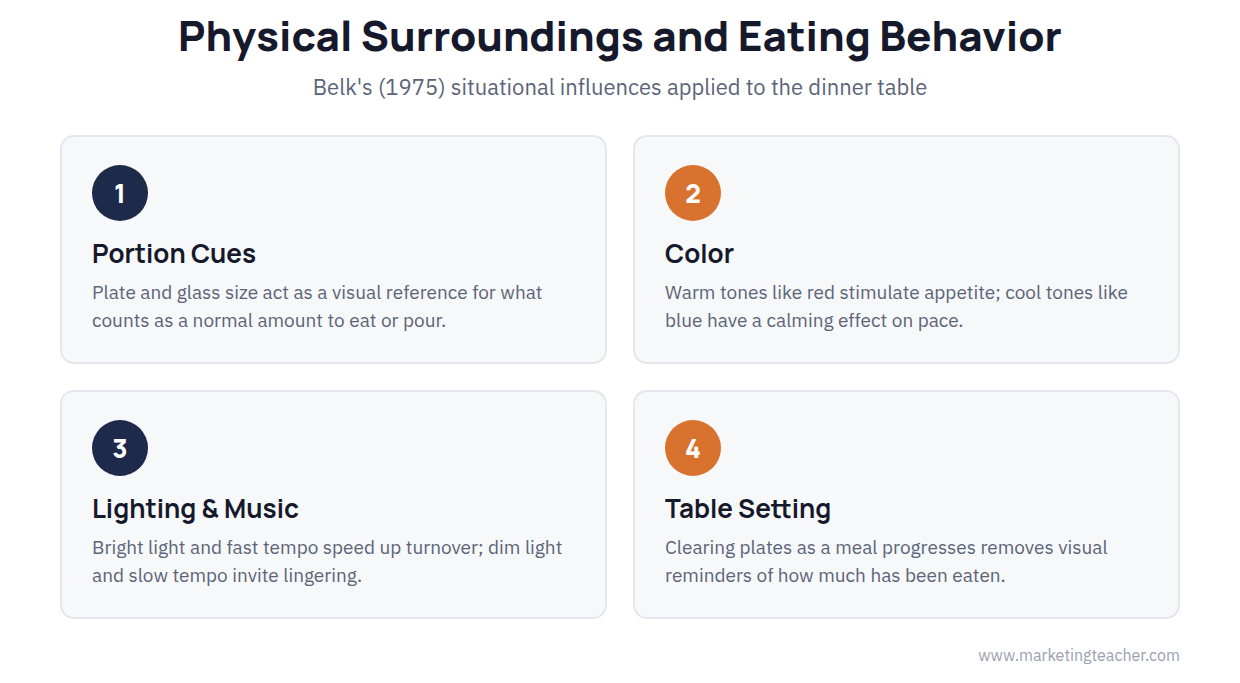
Most people assume they decide how much to eat through simple hunger and willpower, but eating is heavily shaped by the physical environment surrounding the meal. Belk (1975) identifies physical surroundings, location, layout, lighting and the objects present in a setting, as one of five situational influences on consumer behavior, and eating is one of the clearest places this plays out. Long before a person consciously chooses a second helping, cues like plate size, lighting and the pace of the room have already nudged the decision.
Portion Cues: Plates, Bowls and Glasses
The size of the container food or drink is served in acts as a visual reference point for how much is “normal” to consume. A larger plate makes a given portion look smaller by comparison, which can lead a diner to serve or eat more before the plate looks full. The same visual effect shows up with drinkware: pouring into a short, wide glass is easy to misjudge compared to a tall, narrow one of the same volume, because people tend to focus more on height than width when estimating how much liquid is in front of them. None of this requires a conscious choice to overeat or overpour; it happens because the container itself is quietly shaping the perception of a normal amount.
Color, Lighting and Appetite
Color plays a role in eating environments much as it does in retail more broadly. Warmer colors such as red are often associated with stimulating appetite and are widely used in restaurant branding and décor, while cooler tones like blue tend to have a calming rather than an appetite-driving effect. Lighting works alongside color: a bright, energetic dining room encourages a faster pace of eating and turnover, while soft, dim lighting invites diners to relax, linger, and often order more courses or drinks over a longer visit.
Table Setting and Perceived Consumption
How a table is cleared and set also shapes eating behavior. A table where empty plates and glasses are cleared away as a meal progresses gives diners fewer visual reminders of how much they have already eaten, compared to a table where everything remains piled up in view. Tablecloth color follows a similar logic to plate color: warmer tones are associated with a livelier, appetite-driving atmosphere, while cooler or more neutral tones tend to have a calmer effect on the pace of a meal.
Music, Pace and the Length of a Meal
Music adds another layer of pacing on top of light and color. A fast tempo tends to speed up how quickly people eat and how soon they leave, which suits a busy lunch counter that depends on rapid table turnover. A slower tempo has the opposite effect, encouraging diners to relax, talk longer, and often order an extra course or drink they might otherwise have skipped. Restaurants that carefully match tempo to service period, brisker music at lunch, calmer music in the evening, are applying the same physical-surroundings logic as lighting and plate size, just through sound instead of sight.
Culture Shapes What Counts as a Normal Portion
Physical surroundings do not act on a blank slate; culture sets the baseline that portion cues then nudge up or down. What counts as a generous serving in one country can look small in another, and expectations around course structure, shared plates versus individual plates, and how long a meal is supposed to last all vary widely. A restaurant chain expanding into a new market cannot simply copy the plate sizes and pacing that worked at home, since the same lighting and portion cues will be interpreted against a different cultural baseline for what a normal meal looks like.
Why This Matters Beyond the Dinner Table
These same physical-surroundings principles extend well beyond restaurants. A grocery store’s produce lighting, a café’s background music, and a fast-food counter’s bright, high-energy palette are all deliberate applications of the same idea: the eating or shopping environment itself is doing quiet persuasive work before a customer ever consciously decides what or how much to buy. Marketers who understand this can shape genuinely better dining experiences, not just faster turnover, by matching the atmosphere to the kind of meal a venue wants to encourage.
Summary
Eating is rarely the purely conscious decision it feels like. Belk’s (1975) concept of physical surroundings helps explain why portion cues such as plate and glass size, color and lighting choices, and even how a table is cleared during a meal can all shift how much a person eats or how long they linger, independent of genuine hunger. Restaurants and food retailers who understand these situational cues can deliberately design faster or slower, lighter or heavier dining experiences to match what a venue is trying to achieve, whether that is a quick lunchtime turnover or a relaxed evening meal.
The slides, worksheet, lesson plan and poster for this lesson are free to download and free to use in your course — no sign-up, no permission needed. See the teacher resources →
Assign this lesson to your class:
Using Canvas, Blackboard or Moodle? Copy the link and paste it into your course page or assignment. More ways to add lessons to your LMS.

