
Why Time Is a Situational Influence
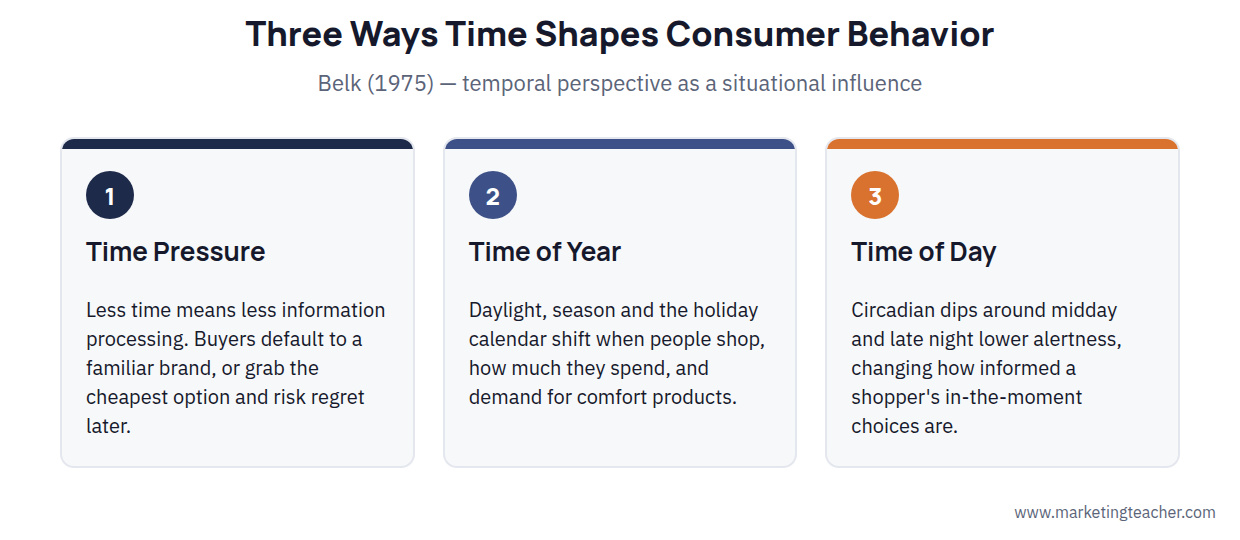
Belk (1975) identifies temporal perspective as one of five situational variables that shape consumer behavior, alongside physical surroundings, social surroundings, task definition and antecedent states. Time is something a consumer must give up in order to shop at all, which makes it a genuinely valuable resource, and how much of it a consumer has, and when in the day, week or year they have it, changes what and how they buy. Time affects consumption in three main forms: time pressure, time of year, and time of day.
Time Pressure and Decision Shortcuts
When a consumer does not have much time available, they tend to process less information, since thorough problem solving itself takes time. A shopper in a hurry may default to a well-known, often higher-priced brand simply because it removes the need to weigh up alternatives, or they may instead grab the cheapest available option and risk regretting the choice later, a form of post-purchase cognitive dissonance. Either way, time pressure narrows the decision down to a shortcut rather than a full evaluation, which is why point-of-sale placement and brand familiarity matter so much more when a customer is rushed.
Time of Year
Consumers are affected by the changing seasons in ways that go beyond the obvious product needs, such as coats in winter and sunscreen in summer. The amount of daylight available also shapes behavior: shorter winter days and the shift to darker evenings push many consumers to shop earlier in the day, and demand for comfort-oriented products tends to rise as daylight falls. Spending overall tends to be higher in summer months, and food purchasing in particular varies with both season and the calendar of holidays throughout the year, from festive gatherings to summer barbecues.
Time of Day and the Body’s Clock
Everyone has a circadian rhythm, an internal body clock that regulates sleeping and waking. Most people experience a natural dip in alertness from around midnight to the early morning, and again in the early afternoon. A consumer shopping during one of these low-energy windows may have less mental bandwidth available and may make less informed purchases than they would at a higher-alertness time of day. Many consumers counteract this dip with caffeine, though the preferred source varies by culture, with coffee more common in some countries and tea in others, itself a small but real example of how a situational factor, time of day, interacts with a cultural one.
Time of Week
Beyond the day and the season, the week itself carries its own rhythm. Weekday shopping trips tend to be shorter, more purposeful and more tightly focused on replenishing specific items, often squeezed around work and other commitments. Weekend trips are typically longer, more exploratory, and more likely to include browsing, comparison and discretionary purchases that a weekday visit would skip entirely. A consumer buying groceries on a Tuesday evening and the same consumer buying groceries on a Saturday morning can behave almost like two different customers, even though nothing about their underlying needs or preferences has actually changed.
Designing Around the Clock and the Calendar
Once time is understood as a situational influence rather than a fixed backdrop, it becomes something marketers can actively design around. Retailers add express checkouts for rushed periods, adjust store lighting and opening hours to match seasonal daylight patterns, and time promotional pushes to when demand for comfort or seasonal products naturally rises. Digital marketers do the same thing with send times and ad scheduling, recognising that the same message can land very differently depending on whether it reaches a time-pressed commuter or a relaxed weekend browser. This lesson’s temporal perspective is one piece of the broader picture covered in Situational Influences on Outlet Selection, where task definition and antecedent states join time as further factors shaping where and how a consumer chooses to shop.
Summary
Time is one of the five situational variables identified by Belk (1975) as shaping consumer behavior, and it operates through three distinct mechanisms: time pressure, which pushes buyers toward shortcuts rather than full evaluation; time of year, which shifts spending, comfort-product demand and food purchasing with the seasons and daylight; and time of day, which interacts with the body’s circadian rhythm to affect how alert and deliberate a shopper’s decisions are. Marketers who build their store layouts, promotions and messaging around when a consumer is actually shopping, rather than assuming every visit looks the same, are better placed to meet real, momentary needs rather than an idealised average customer.
The slides, worksheet, lesson plan and poster for this lesson are free to download and free to use in your course — no sign-up, no permission needed. See the teacher resources →
Assign this lesson to your class:
Using Canvas, Blackboard or Moodle? Copy the link and paste it into your course page or assignment. More ways to add lessons to your LMS.

