
The Personal Selling Process
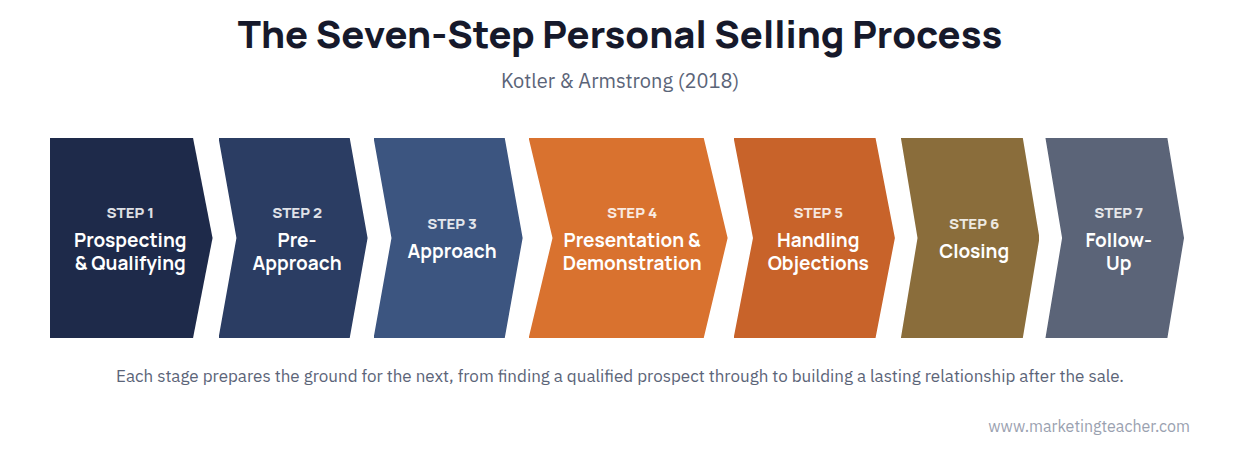
Kotler and Armstrong (2018) describe personal selling as a seven-step process running from prospecting through to follow-up: prospecting and qualifying, pre-approach, approach, presentation, handling objections, closing, and follow-up. Because personal selling relies on direct, two-way contact, it is particularly suited to exactly this kind of situation – a cautious, high-value buyer who needs reassurance a brochure cannot give.
Applying the Process to This Meeting
Presentation: tailor the pitch around this specific buyer’s needs rather than a generic script, matching the bike’s features (spare factory capacity, in-house build, direct manufacturer relationship) to her actual concerns (Kotler & Armstrong, 2018).
Handling objections: when reliability comes up, Rackham’s (1988) SPIN approach is useful here – ask disciplined questions about what exactly went wrong with previous small suppliers, rather than dismissing the concern, so the rep can address the real underlying worry (usually delivery timing or after-sales response speed) with a specific, checkable commitment.
Closing and follow-up: Weitz, Castleberry and Tanner (2004) note that a range of closing techniques are all legitimate, but that the follow-up call after delivery is what actually builds the long-term relationship – particularly important here, since this buyer is evaluating whether Colorado Ricardo can be trusted for repeat orders, not just a single sale.
This same buyer relationship also depends on the channel and distribution strategy set out in the Place, Distribution, Channel, or Intermediary exercise.
The slides, worksheet, lesson plan and poster for this lesson are free to download and free to use in your course — no sign-up, no permission needed. See the teacher resources →
Assign this lesson to your class:
Using Canvas, Blackboard or Moodle? Copy the link and paste it into your course page or assignment. More ways to add lessons to your LMS.

