
This is the suggested answer to the Direct and Indirect Costs exercise on Colorado Ricardo Mountain Bikes.
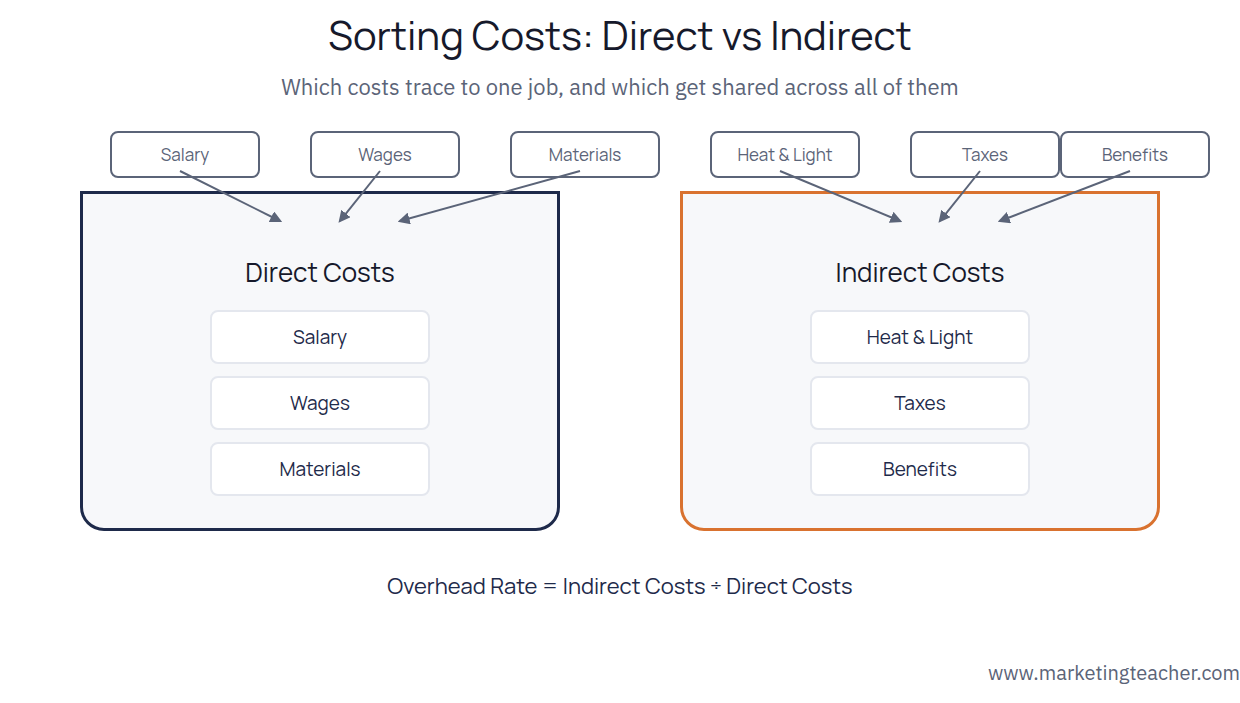
Direct Costs
Frame materials and direct labour to build each bike are direct costs – they can be traced exactly to each individual bike produced, including the 50 bikes in the bulk order.
Indirect Costs
Factory rent, Ricardo’s own salary, and marketing spend are indirect costs – they carry on regardless of whether this particular bulk order is accepted, and cannot be traced to any single bike.
Why the Distinction Matters for Pricing
Because the indirect costs will be incurred either way, Ricardo does not strictly need the bulk order’s price to cover a share of them – he only needs it to cover the direct costs of $700 per bike plus some contribution toward the indirect costs and profit. This means he has more room to negotiate on price for this order than a full-cost calculation would suggest, as long as his normal-priced sales are already covering the indirect costs.
This connects directly to the per-bike contribution figure calculated in the Contribution Analysis exercise.
The slides, worksheet, lesson plan and poster for this lesson are free to download and free to use in your course — no sign-up, no permission needed. See the teacher resources →
Assign this lesson to your class:
Using Canvas, Blackboard or Moodle? Copy the link and paste it into your course page or assignment. More ways to add lessons to your LMS.

