
What Is Crowdfunding?
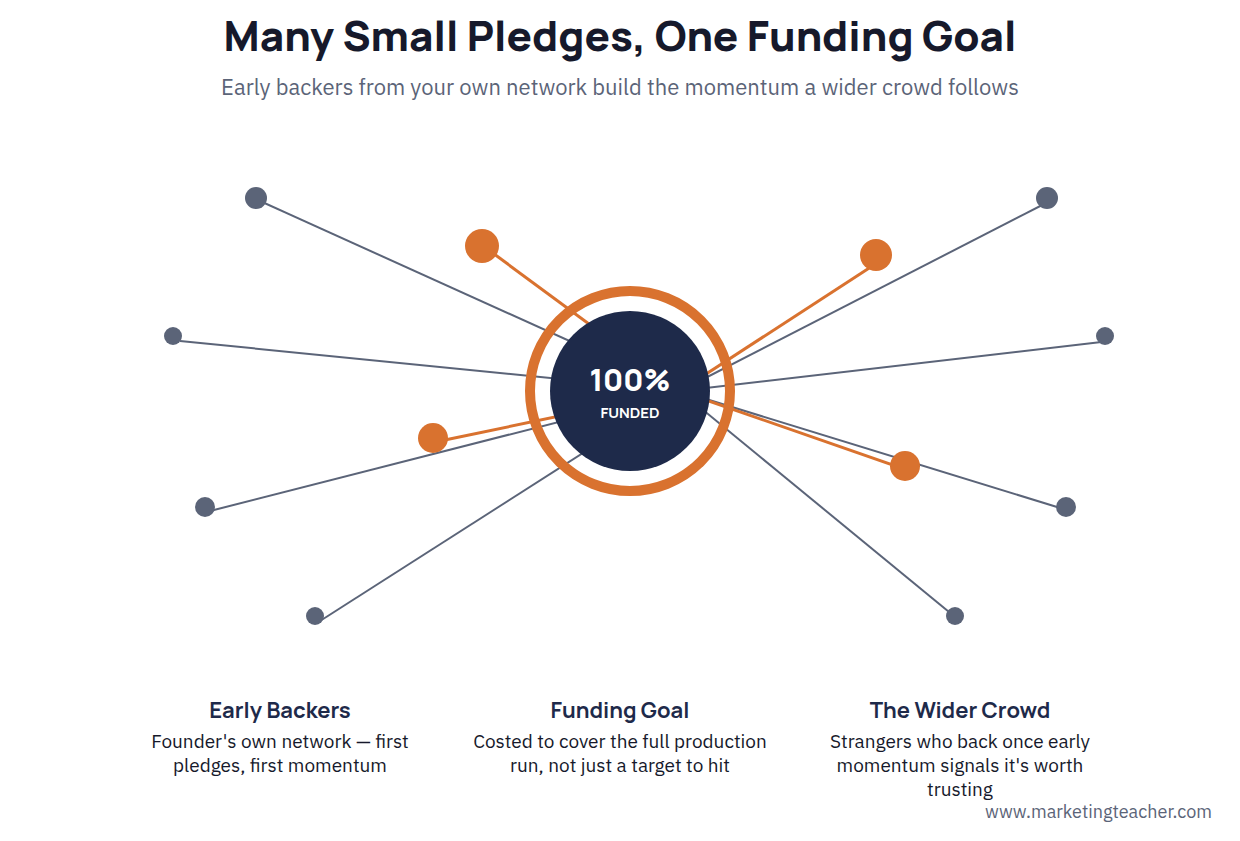
Crowdfunding is a way of financing a start-up or a new product by raising money from a large number of individuals rather than from a single bank or investor, usually through a dedicated online platform. Instead of asking one lender for the whole amount, an entrepreneur asks a crowd of friends, family, existing customers and interested strangers to each contribute a small amount, most commonly in exchange for an early version of the product, a modest reward, or simply the satisfaction of backing something they believe in.
The Main Forms Crowdfunding Takes
Reward-based crowdfunding, the most familiar form, offers backers a product or perk in return for their pledge rather than a financial return. Equity crowdfunding instead offers backers a small ownership stake in the company, functioning a little like a miniature, public share offering. Donation-based crowdfunding asks for support with no reward beyond the cause itself, and peer-to-peer lending platforms let individuals lend directly to a business and earn their money back with interest, cutting a traditional bank out of the transaction entirely. Mollick (2014) studied tens of thousands of campaigns on a major reward-based platform and found that success is strongly associated with the size of a founder’s own existing network, the underlying quality signals in the campaign itself, such as a clear video and regular updates, and geography, rather than the novelty of the idea alone.
Why Businesses Choose Crowdfunding
Beyond simply raising money, a successful campaign builds an early, invested customer base before a product even ships, generates public validation that can help win over other investors, and creates visibility and word-of-mouth that a traditional loan never would. A platform can also give an entrepreneur access to capital and to a community of backers without giving up the operational control a bank loan or a venture investor might otherwise demand.
Why Crowdfunding Campaigns Fail
A campaign built on an idea that has not been properly costed can easily raise its target and still leave a business unable to deliver, because the founder underestimated how much cash the project actually required once manufacturing, shipping and platform fees are accounted for. Missing a funding target, or hitting it but badly underestimating fulfilment costs, damages a business’s credibility with exactly the backers it will need for a future launch. Unlike a bank loan or an investor round, crowdfunding also offers no built-in mentorship: a business bypasses the guidance a bank or a professional investor might otherwise provide, and is left to solve production and delivery problems largely on its own.
What Improves the Odds of a Successful Campaign
Bringing an existing group of friends, family and early supporters into the campaign from day one gives it the visible early momentum that later, more cautious backers use as a signal that a project is worth supporting, since Mollick (2014) found personal network size to be one of the strongest predictors of a campaign’s outcome. A clear, persuasive explanation of exactly what the funding will be used for matters more than a polished sales pitch, and consistent, honest updates throughout the campaign, and afterward during fulfilment, build the kind of trust that turns one-time backers into repeat customers for a business’s next launch.
Choosing the Right Platform for the Goal
A reward-based platform suits a business with a genuine physical product and a fulfilment plan already worked out, while an equity platform suits a business willing to give up a small ownership stake in exchange for a larger capital raise. Checking a platform’s fee structure, its typical audience, and whether funds are only released on hitting the target, or released regardless, are practical details worth confirming before choosing where to launch.
Setting a Realistic Funding Target
The target figure on a campaign page is not just a fundraising goal, it is a public promise about what the business can deliver. Setting it too low to look more achievable, without covering manufacturing, packaging, shipping and platform fees in full, is one of the most common ways a technically “successful” campaign still leaves a business unable to fulfil its orders. Costing the whole production run properly before launch, and building in a margin for the inevitable delays and price changes that come with scaling up a small workshop into a real supply chain, protects both the business’s cash position and its reputation with the backers who trusted it with their money.
Summary
Crowdfunding lets an entrepreneur raise money from a large number of small contributors rather than a single lender, in exchange for a reward, an equity stake, or simply the satisfaction of supporting the idea, depending on the platform’s model. Mollick’s (2014) research on funding outcomes shows that the size of a founder’s own network and the credibility signals built into the campaign matter more than novelty alone, while the biggest risk is not failing to reach the funding target but underestimating what it will actually cost to deliver on it once the campaign succeeds.
The slides, worksheet, lesson plan and poster for this lesson are free to download and free to use in your course — no sign-up, no permission needed. See the teacher resources →
Assign this lesson to your class:
Using Canvas, Blackboard or Moodle? Copy the link and paste it into your course page or assignment. More ways to add lessons to your LMS.

