
What Is Search Engine Optimization?
Search engine optimization, or SEO, is the practice of improving a website so it earns a high position in a search engine’s unpaid, organic results, without paying for the placement the way a pay-per-click advert does. Search marketing as a whole covers both this unpaid side and the paid side, including how a pay-per-click auction actually decides which advert wins a position. SEO works by making a page easier for a search engine to find, understand, and trust, so that when someone searches for a relevant term, the search engine judges that page worth showing near the top of the results. Because organic clicks cost nothing per visit once a page ranks well, SEO is one of the most cost-effective long-term channels available to a business, though it takes patience: unlike a paid advert, which can appear the moment a campaign launches, an organic ranking is usually earned gradually, over weeks or months, as a search engine builds confidence in a page.
How Search Engines Decide What Ranks
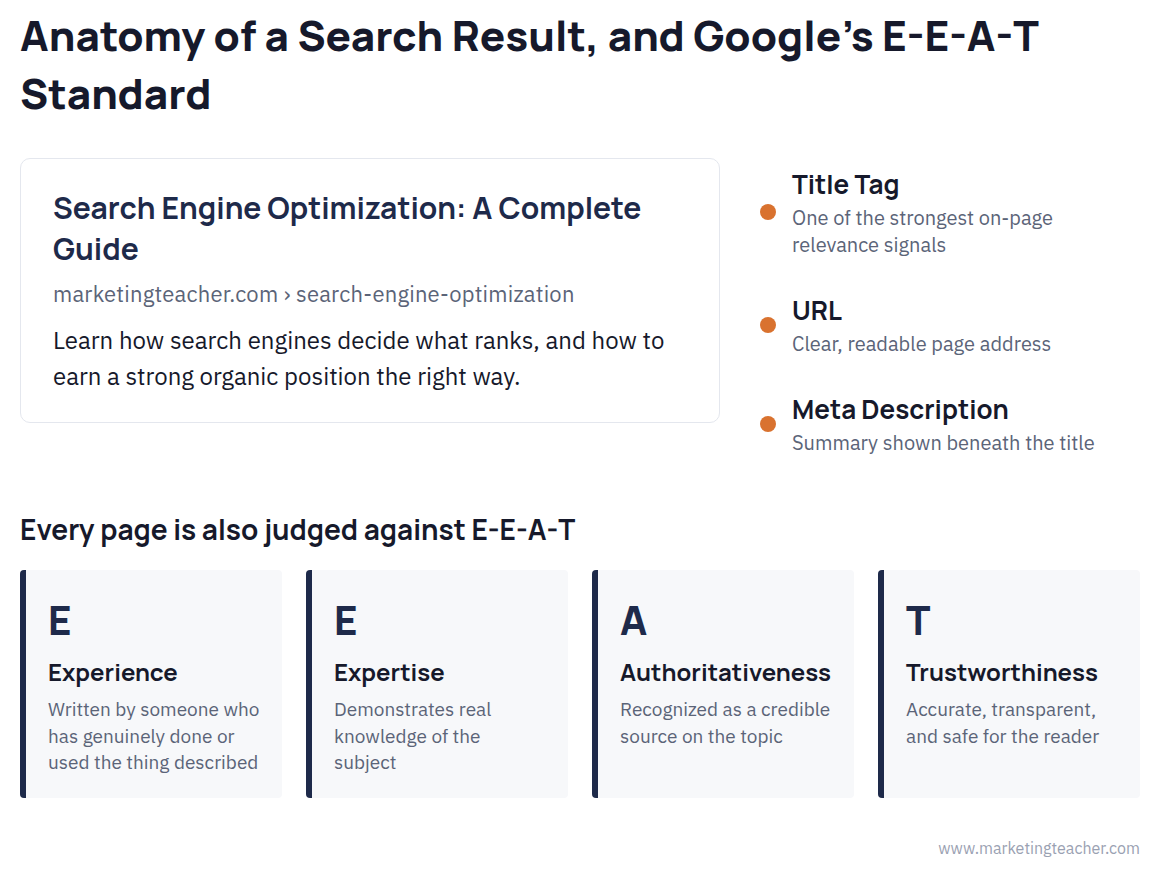
A modern search engine like Google evaluates a page against hundreds of signals before deciding where it belongs in the results, but those signals fall into a few broad groups a marketer can actually act on. On-page signals include how well a page’s title, headings, and body content match what someone is actually searching for; off-page signals include how many other reputable sites link to or mention the page; and technical signals include whether the page loads quickly and displays properly on a phone. Running through all of this is a standard Google’s own human quality raters are trained to apply, known as E-E-A-T: experience, expertise, authoritativeness, and trustworthiness (Google, 2022). Google added the first “E,” experience, to this standard in 2022, reflecting a deliberate shift toward rewarding content written by someone who has genuinely done or used the thing they are writing about, not just researched it. Page titles remain one of the strongest of these on-page signals: a clear, accurate title that front-loads the actual search term still carries real weight in how a search engine judges what a page is about, contrary to a persistent myth that titles and heading tags matter less than they used to.
Earning Trust and Links the Right Way
One of the most damaging pieces of outdated SEO advice still circulating is that buying links is harmless, or that Google will not take much notice if a business does it. This is false, and it carries real risk. Google’s Search Essentials guidelines explicitly classify unqualified paid links as a “link scheme,” a violation that can trigger a manual penalty or be caught automatically by Google’s spam-detection systems, in either case reducing or removing a page’s visibility in search results. The safer and more durable path is to earn links the way they were originally intended to be earned: by publishing genuinely useful content that other reputable sites choose to reference on their own, and by building real relationships within an industry rather than shortcutting the process with a paid placement. A well-written, genuinely informative page, the kind covered in a related lesson on content marketing, tends to attract links naturally over time, which is both safer and, in the long run, more effective than any paid shortcut.
Common SEO Myths, Corrected
A few other pieces of outdated advice are worth correcting directly. It is sometimes claimed that keyword-stuffing, repeating a target phrase as many times as possible, improves rankings; in reality, this makes content harder to read and can actively harm rankings, since modern search engines are built to reward natural, helpful writing over mechanical repetition. It is also sometimes claimed that a highly specific, longer search phrase is not worth targeting because so few people search for it; in fact, these longer and more specific phrases are usually easier to rank for and often convert into a genuine customer at a higher rate, precisely because they signal exactly what the searcher wants. Finally, it is worth being skeptical of any SEO advice tied to a single person’s name rather than a platform’s own published guidance; the field is guided today by Google’s official Search Essentials documentation and public communication from Google Search Advocates such as John Mueller, not by informal tips attributed to any one long-departed spokesperson.
Summary
Search engine optimization covers the unpaid, organic side of search marketing, earned through a combination of on-page relevance, off-page trust signals, and technical performance, all judged against a standard Google summarizes as E-E-A-T: experience, expertise, authoritativeness, and trustworthiness (Google, 2022). How difficult it is to rank well depends heavily on the level of competition for a given search, as the small-town-versus-big-city lawyer comparison shows, and the safest path to real authority is earning links and trust through genuinely useful content rather than through paid shortcuts that Google’s own guidelines explicitly prohibit.

