
This is the suggested answer to the Core Competences exercise on Colorado Ricardo Mountain Bikes.
What Is Colorado Ricardo’s Core Competence?
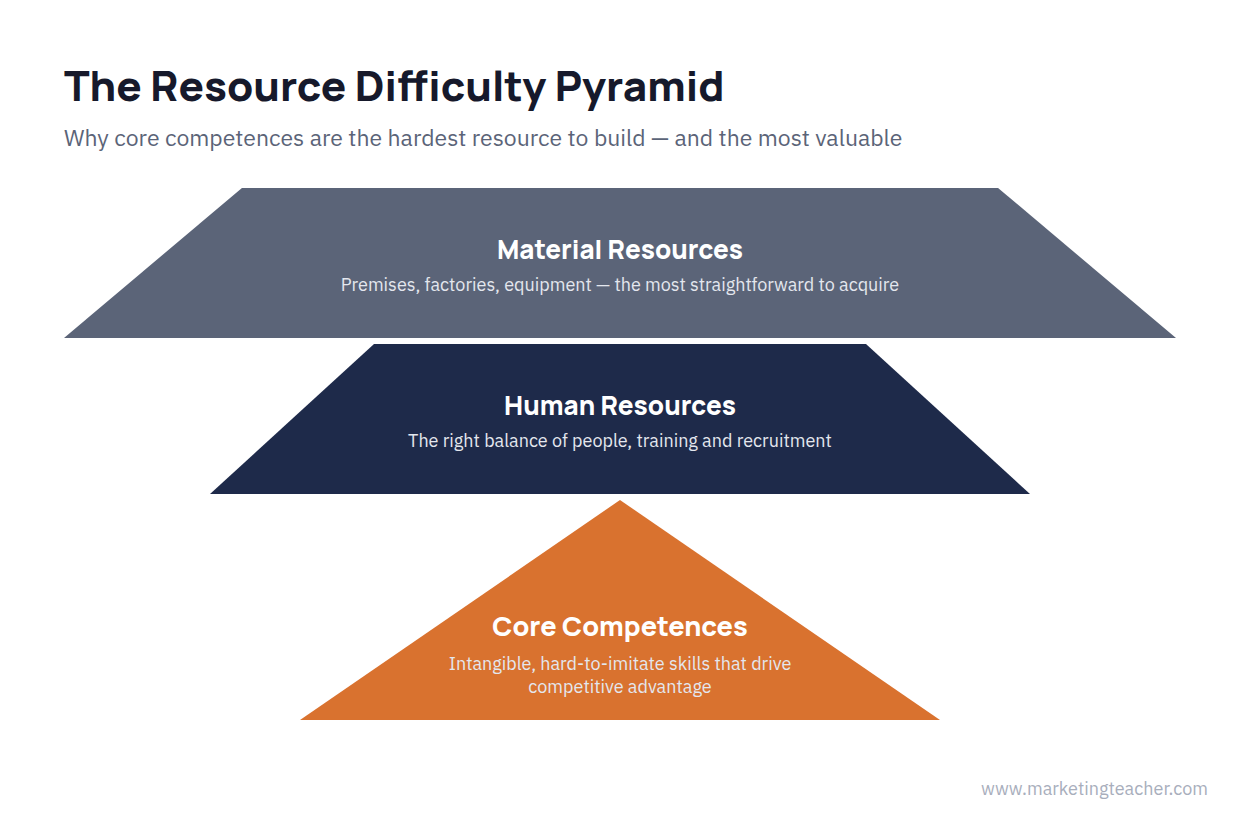
It is tempting to point at the factory as the core competence, but the factory is just a resource – a building anyone with enough capital could buy. The real core competence is Ricardo’s accumulated hand-building and frame-durability expertise: the specific know-how, refined through years of trial and error, that makes a Colorado Ricardo bike survive terrain that breaks other bikes.
Testing It Against the Three Criteria
Valuable – durability is precisely what serious off-road riders pay a premium for, so this competence directly drives what customers value. Rare – small competitors lack Ricardo’s specific design know-how, and mass manufacturers optimise for cost and volume rather than ruggedness, so few rivals have built the same expertise. Hard to imitate – it was built through years of iterative failure and refinement, which is difficult for a new entrant to shortcut.
Where Else Could It Be Leveraged?
An e-mountain bike is the most credible next market: it still needs a frame built to survive rough terrain, so Colorado Ricardo’s durability expertise transfers directly, even though the electrical components are new to the business. A move into an unrelated category, such as apparel, would not draw on this competence at all.
This is a useful check on the options raised in the Ansoff’s Matrix exercise – a growth option that draws on a genuine core competence carries less risk than one that does not.
The slides, worksheet, lesson plan and poster for this lesson are free to download and free to use in your course — no sign-up, no permission needed. See the teacher resources →
Assign this lesson to your class:
Using Canvas, Blackboard or Moodle? Copy the link and paste it into your course page or assignment. More ways to add lessons to your LMS.

