
This is the suggested answer to the Five Forces exercise on Colorado Ricardo Mountain Bikes.
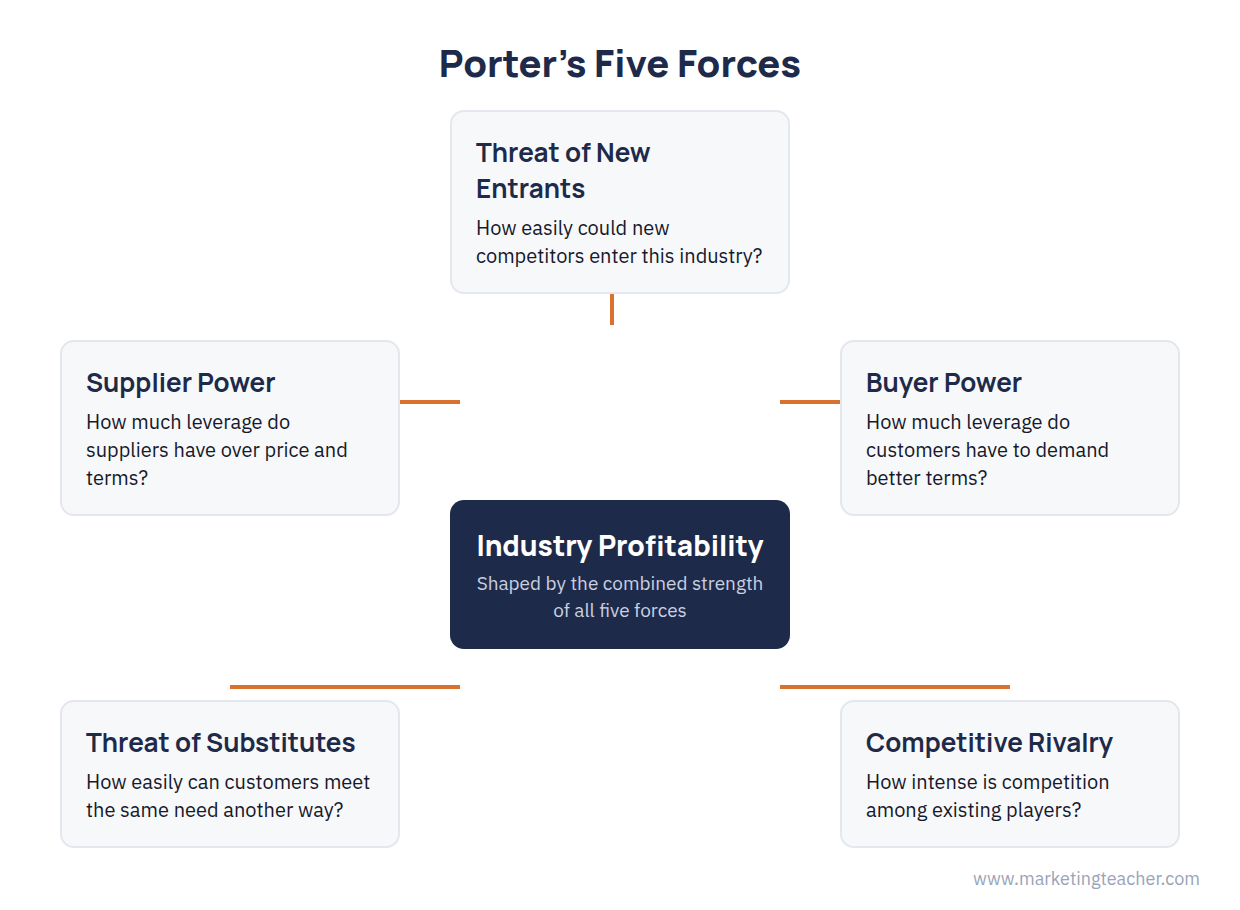
Competitive Rivalry
Moderate to high. National manufacturers now compete for the same off-road riders Colorado Ricardo once served almost alone, and rivalry over a shrinking pool of enthusiast buyers is a plausible driver of its three years of falling sales.
Bargaining Power of Suppliers
Rising. A small number of specialist suppliers make the frame components Colorado Ricardo depends on, and this concentration would only increase if it moved into e-mountain bikes, where battery and motor suppliers are even fewer.
Bargaining Power of Buyers
Significant. Independent bike shops, Colorado Ricardo’s main route to customers, can list several competing brands side by side and switch stock easily, giving them real leverage over price and shelf space.
Threat of New Entrants
Moderate. Building a rugged, hand-built bike at small scale has relatively low capital barriers, but earning the kind of trusted reputation Colorado Ricardo has built over years is much harder to replicate quickly.
Threat of Substitutes
Real and growing. Gravel bikes and e-mountain bikes both draw riders away from a traditional off-road-only bike if Colorado Ricardo does not offer an equivalent itself.
Because several of these forces point toward the same growing categories – gravel and e-bikes – it is worth returning to Ansoff’s Matrix to decide how, not just whether, Colorado Ricardo should respond.
The slides, worksheet, lesson plan and poster for this lesson are free to download and free to use in your course — no sign-up, no permission needed. See the teacher resources →
Assign this lesson to your class:
Using Canvas, Blackboard or Moodle? Copy the link and paste it into your course page or assignment. More ways to add lessons to your LMS.

