
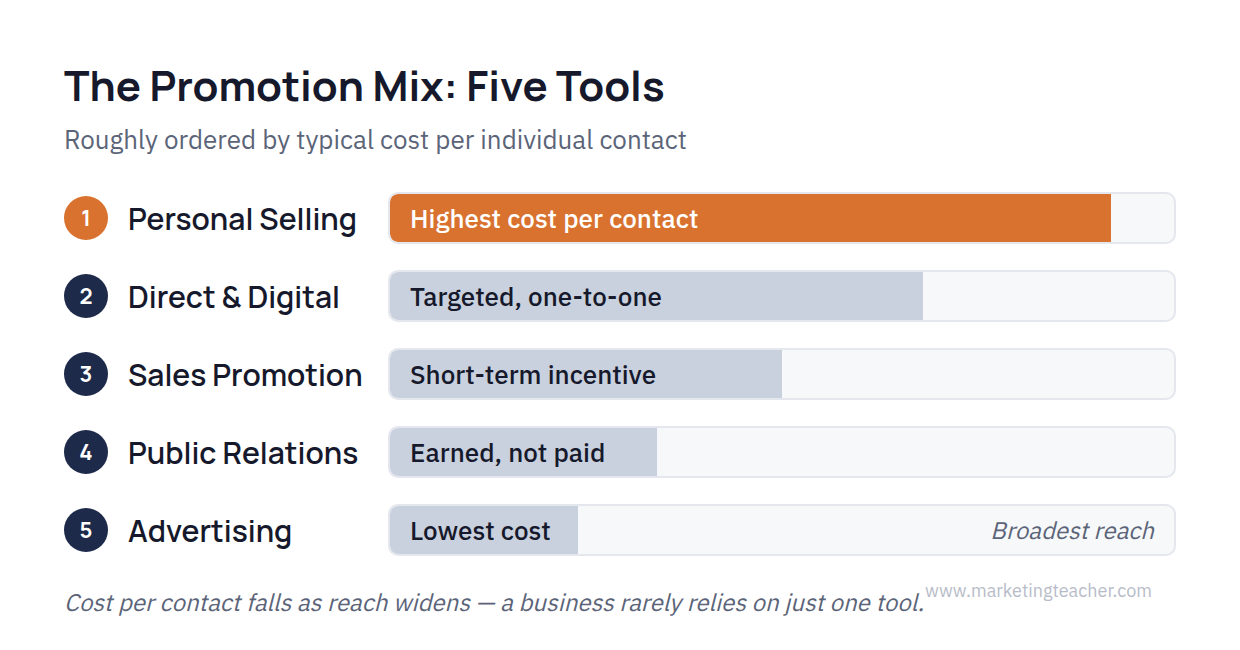
The Promotion Mix
Kotler and Armstrong (2018) group promotion into five tools: advertising (paid, non-personal communication through mass media), sales promotion (short-term incentives to encourage a purchase), public relations (building goodwill through non-paid media coverage and events), personal selling (direct, personal contact with the customer), and direct and digital marketing (direct communication with individually targeted customers, and building a one-to-one relationship). Which tools a company uses, and how much of each, depends on the product, the target market, and the budget available.
A Promotion Mix for Colorado Ricardo’s E-Mountain-Bike Launch
Public relations: pitch Denver and regional press an authentic story (“a 100% Colorado-built bike brand goes electric”) rather than paying for advertising space that a small budget cannot sustain.
Sales promotion: a free test-ride weekend at the factory showroom, with a trade-up discount for existing owners, turning loyal customers into word-of-mouth advocates for the new model.
Promotion choices should reinforce the channel and pricing decisions made elsewhere in the launch plan – see the Place, Distribution, Channel, or Intermediary and Segmentation exercises.
The slides, worksheet, lesson plan and poster for this lesson are free to download and free to use in your course — no sign-up, no permission needed. See the teacher resources →
Assign this lesson to your class:
Using Canvas, Blackboard or Moodle? Copy the link and paste it into your course page or assignment. More ways to add lessons to your LMS.

