
This is the suggested answer to the SWOT Analysis exercise on Colorado Ricardo Mountain Bikes. There is no single “correct” answer – what matters is that each point is genuinely internal (Strengths/Weaknesses) or external (Opportunities/Threats) to the business.
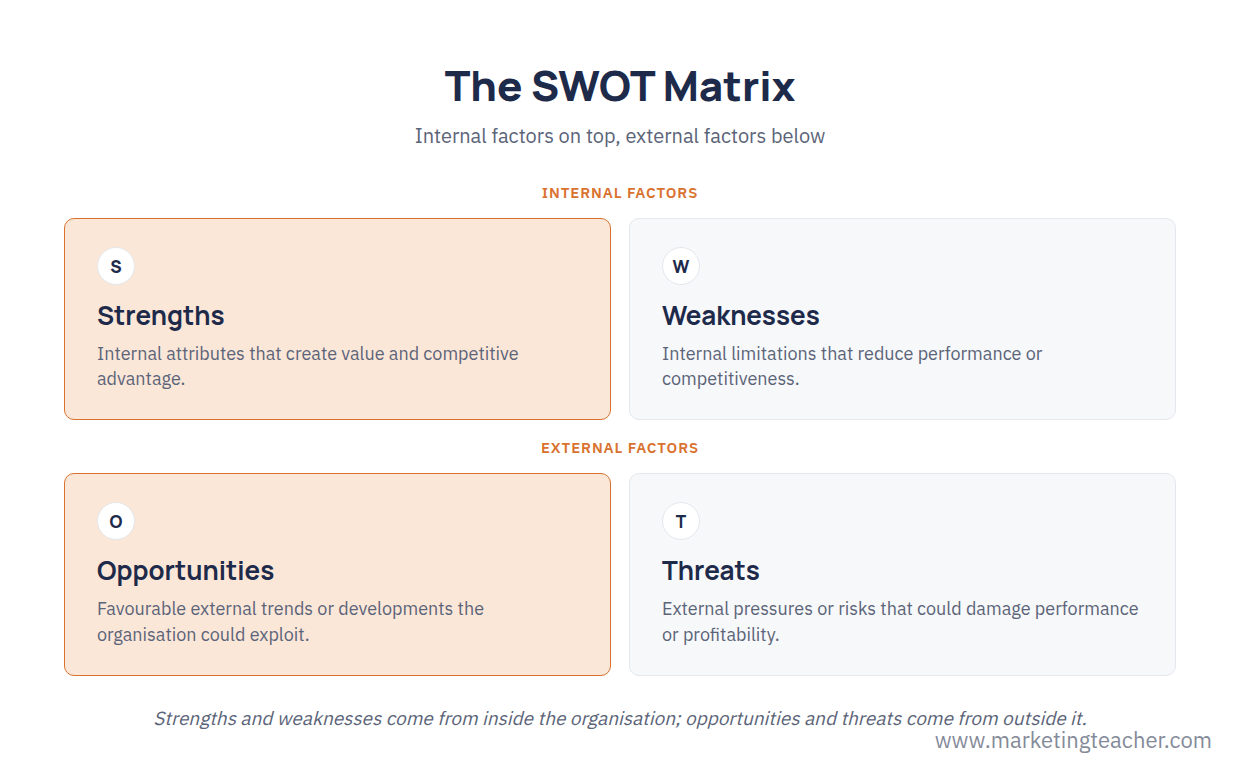
Strengths
A loyal following among serious off-road riders in Colorado, built up over years of word-of-mouth reputation for durability. Spare factory capacity and healthy cash reserves, which give Ricardo room to invest without needing outside funding.
Weaknesses
A single product line (one off-road bike) sold in a single region, with almost no presence outside Colorado. No meaningful online or digital sales presence to reach riders beyond word-of-mouth.
Opportunities
Growing demand for gravel bikes and e-mountain bikes across the wider cycling market – categories Colorado Ricardo does not yet compete in. Spare capacity and cash reserves make expansion into a neighbouring state a realistic near-term move.
Threats
Larger national manufacturers have started targeting the same off-road niche Ricardo once had largely to himself. Rising costs for imported components could squeeze margins on an already-declining sales base.
As with most SWOT analyses, the real skill is not listing points but matching them – deciding which strengths can capture which opportunities, and which weaknesses need fixing before a threat becomes serious.
The slides, worksheet, lesson plan and poster for this lesson are free to download and free to use in your course — no sign-up, no permission needed. See the teacher resources →
Assign this lesson to your class:
Using Canvas, Blackboard or Moodle? Copy the link and paste it into your course page or assignment. More ways to add lessons to your LMS.

