
The Core Product: What Is the Customer Really Buying?
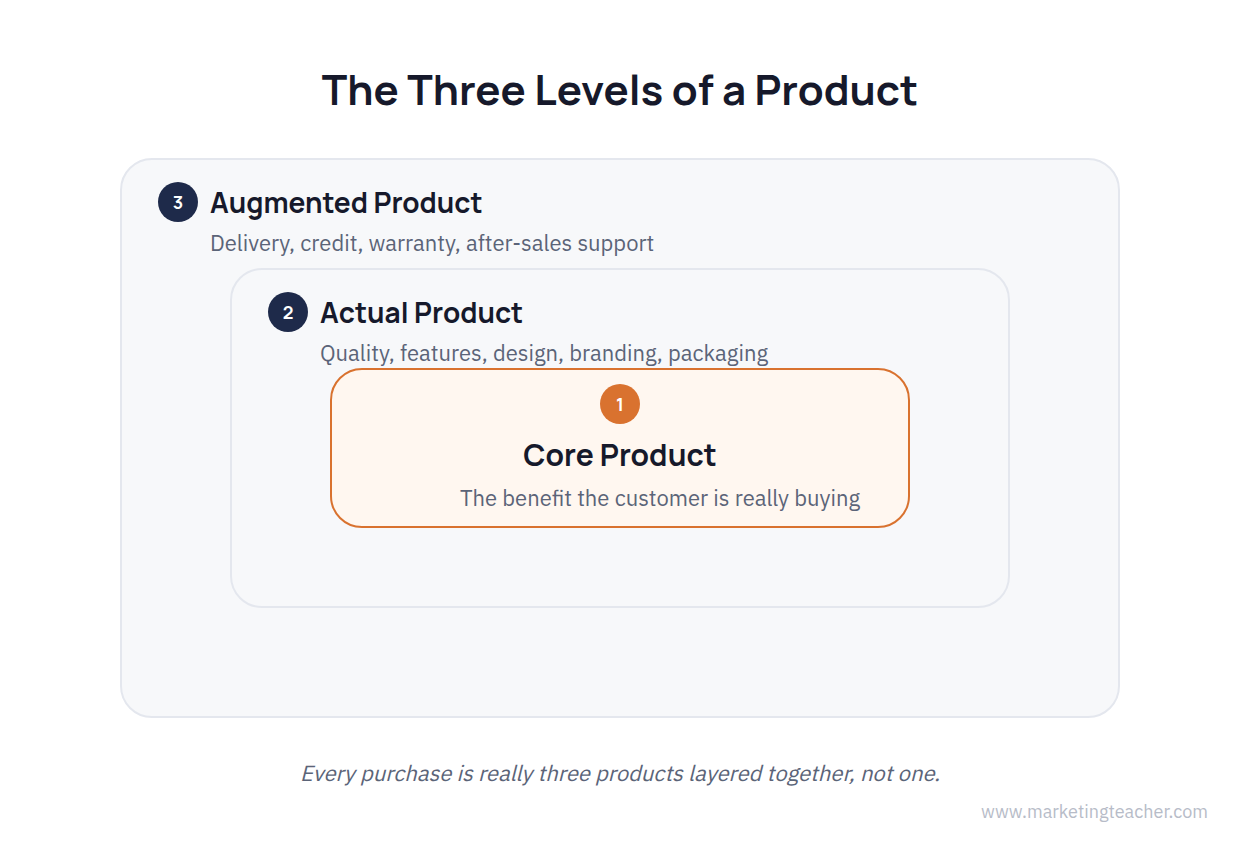
Kotler and Armstrong (2018) define the core product as the problem-solving benefit a customer is actually buying, separate from the physical item itself. A Colorado Ricardo customer is not buying an e-mountain-bike so much as they are buying freedom, adventure and off-road access to the Rockies without needing a car – the same core benefit the brand has always sold, now with less physical effort required to reach the trailhead.
The Actual Product: The Bike Itself
The actual product is the tangible version of that benefit: the hand-built steel frame, the mid-drive motor and battery, disc brakes, the Colorado Ricardo colourway and badge, and the build quality the brand is known for. This is the level most competitors focus all their effort on matching, because it is the easiest level to copy or benchmark against a rival’s specification sheet.
The Augmented Product: What Wraps Around the Bike
This augmented layer is where most bike brands actually compete once the core and actual product become similar across the market. It costs Colorado Ricardo relatively little to organise a group ride or extend a warranty, but it gives the customer a reason to choose Colorado Ricardo over a similarly-specified rival bike, and a reason to pay the full price rather than wait for a discount.
The augmented-product decision should follow directly from how Colorado Ricardo is positioned and which customers it is targeting – see the Segmentation and Positioning exercises for how those choices connect.
The slides, worksheet, lesson plan and poster for this lesson are free to download and free to use in your course — no sign-up, no permission needed. See the teacher resources →
Assign this lesson to your class:
Using Canvas, Blackboard or Moodle? Copy the link and paste it into your course page or assignment. More ways to add lessons to your LMS.

