
Tips and Techniques for Successful Blogging
Tips and Techniques for Successful Blogging
Once a small business or entrepreneur has decided to blog as part of their wider content marketing, the quality and consistency of individual posts is what actually determines whether readers keep coming back. Pulizzi (2013) identifies consistency and genuine depth, rather than sheer volume of output, as the two habits that most reliably build a loyal readership over time, and the practical tips below turn those two habits into specific planning, writing and editing routines.
Plan Before You Write
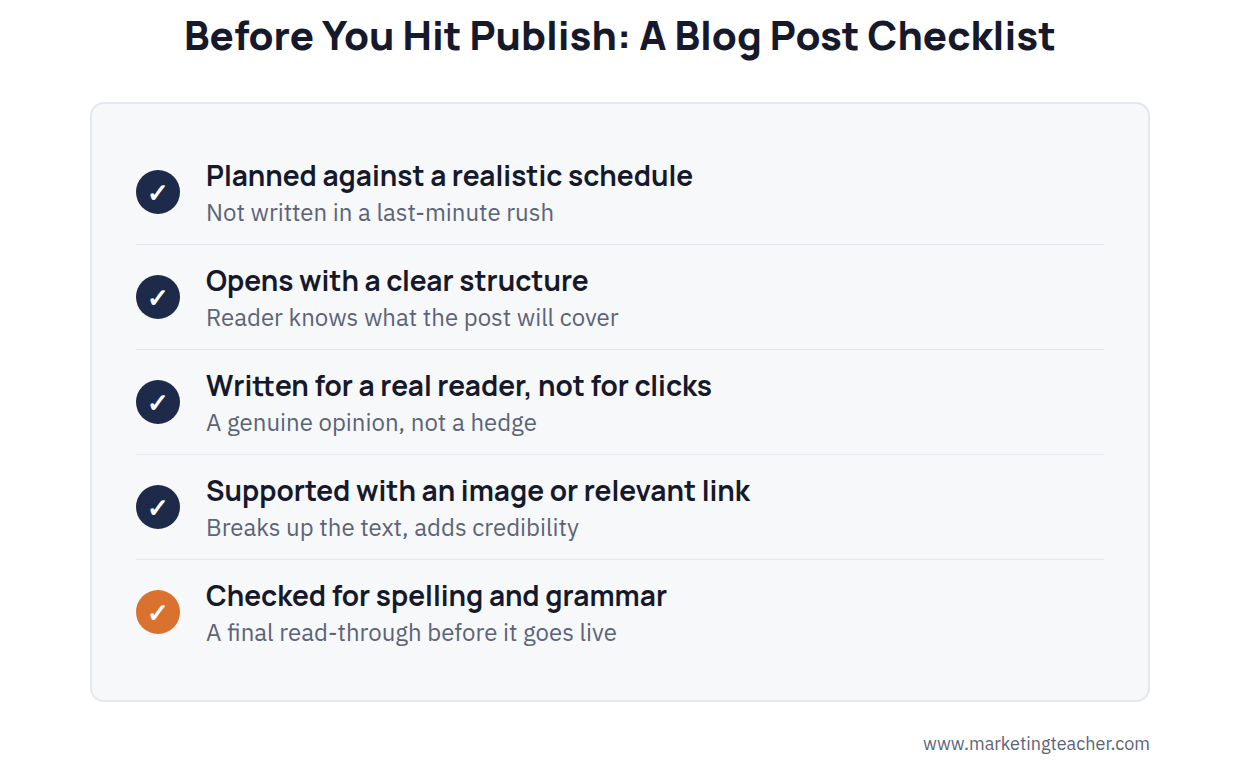
A publishing schedule, agreed in advance and followed consistently, matters more than writing every single day. Asking readers directly how often they actually want new content is a more reliable guide than guessing, and keeping a running list of potential post ideas, jotted down as they occur rather than invented under deadline pressure, means a writer is never starting from a blank page. Keeping one or two finished posts in reserve also protects a publishing schedule against the inevitable week when illness or a business emergency gets in the way.
Write With a Clear Structure
Telling a reader early on exactly what a post will cover gives them a reason to keep reading and gives the writer a structure to follow rather than meandering toward a point. A post should end when its actual point has been made rather than being stretched out to hit an arbitrary length, since padding a post that has already said what it needed to say only makes it feel thinner and less interesting, not more substantial. Writing in short, focused sessions of thirty to sixty minutes, rather than trying to produce a finished post in one long sitting, usually produces sharper writing and fits more realistically around the rest of a small business owner’s working day.
Write for Your Actual Reader, Not for Clicks
A post written to satisfy everyone tends to say very little to anyone, so it pays to write specifically for the customers a business actually wants to keep, rather than chasing the widest possible readership. Writing in a natural, direct voice, with a genuine opinion rather than a deliberately vague or hedged one, builds more trust with a reader than a post engineered purely to generate clicks. Pulizzi (2013) makes a similar point in describing genuinely useful content as content that helps a specific, defined audience rather than content optimised purely to attract traffic, since a small business blog succeeds by turning readers into loyal customers, not by maximising visits for their own sake.
Support the Text With Visuals and Links
An image or short video breaks up a page of text and gives a reader’s eye somewhere to pause, which matters because most readers scan a post quickly before deciding whether to read it properly. Relevant outbound links to other sites that support a claim or add useful context can also make a post more credible and more visible in search results, provided they are genuinely relevant rather than added purely for their own sake.
Check the Work Before It Goes Out
Spelling and grammar mistakes are one of the fastest ways to undermine a reader’s confidence in a business’s expertise, so a final read-through before publishing is worth the extra few minutes every time. Reading a post as if seeing it for the first time, ideally after stepping away from it for a while, catches errors and awkward phrasing that are easy to miss immediately after writing.
Bring In Other Voices Occasionally
A guest post from a trusted colleague, supplier, or employee, properly credited, can add a genuinely different perspective without adding to a business owner’s own writing workload every week. This works particularly well when the guest writer has expertise the main blogger does not, since it broadens what the blog can credibly cover without stretching one person’s knowledge too thin, and it can also introduce the blog to a new audience through the guest writer’s own network.
Keep an Eye on What Competitors Are Doing
Reading what similar businesses in the same field are publishing is not about copying their ideas, but about spotting genuine gaps a blog could fill instead. If every competitor is covering the same broad topic in the same way, a post that takes a more specific, practical angle on the same subject is more likely to stand out to a reader who has already seen the generic version elsewhere.
Summary
Successful blogging for a small business or entrepreneur comes down to a small set of practical habits repeated consistently: planning a realistic schedule, keeping a list of ideas and a post in reserve, writing with a clear structure aimed at a genuine reader, supporting the text with relevant visuals and links, and checking the work carefully before it goes live. None of these individually guarantees a large readership, but together they are what turns an occasional, inconsistent blog into one that steadily builds trust and loyal customers over time.

