Culture Is More Than Language
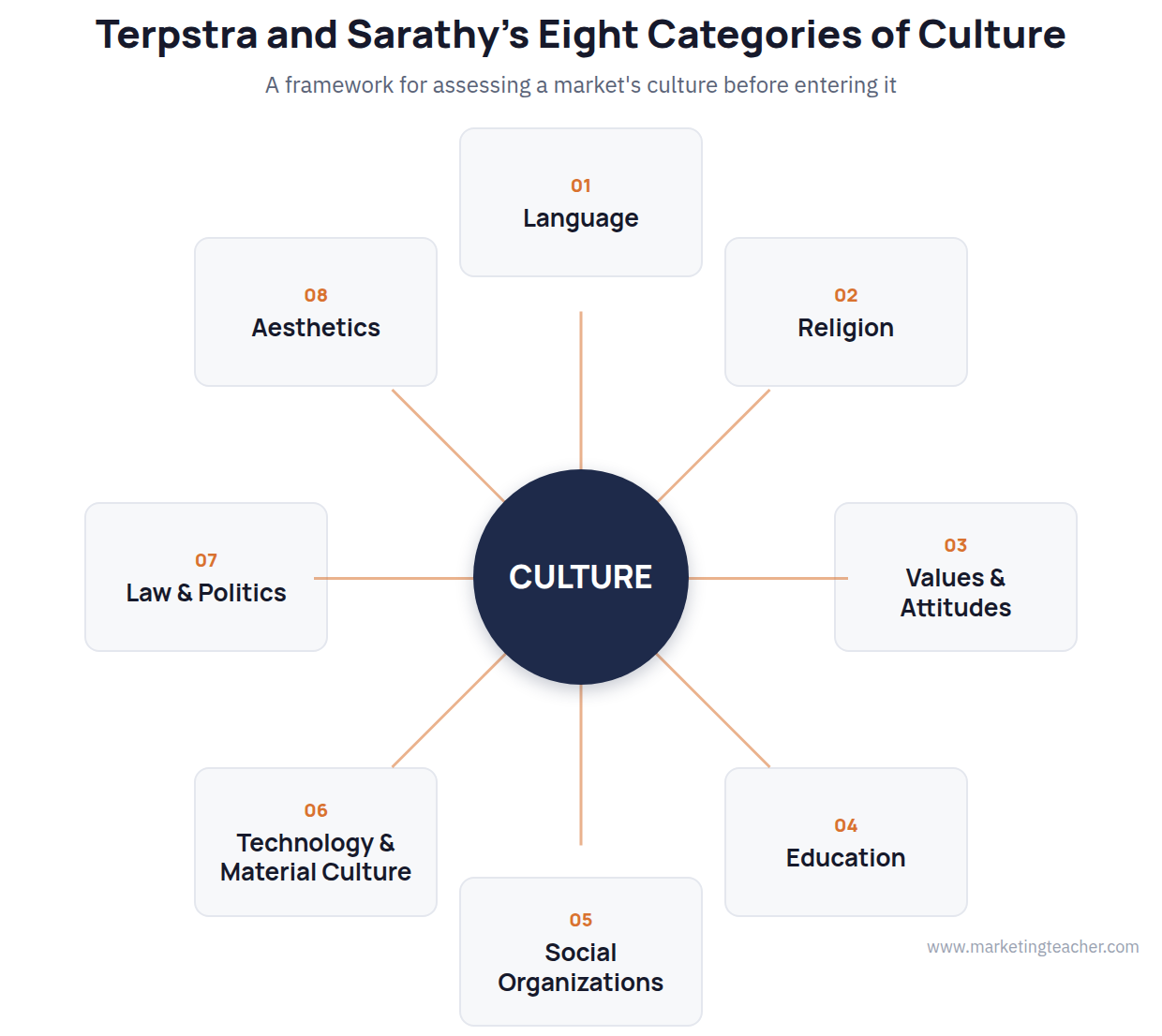
Hall’s (1976) distinction between high-context and low-context cultures makes the point directly: language is more than vocabulary and translation, since how directly or indirectly a message is expected to be communicated varies by culture, and a literal translation of American marketing copy can still misfire if its tone or directness feels wrong to the audience. Terpstra and Sarathy (2000) provide a broader framework for analysing culture across markets, covering language, values, aesthetics, education, religion, social organisation and material culture, going well beyond a single word-for-word translation.
Applying This to the Canadian Launch
Worked example
A specific factor worth researching before finalising Canadian marketing materials is how outdoor and adventure culture is expressed differently there – for example, a stronger regional identity in how Canadian riders talk about specific trail systems and provinces, rather than the broad “Colorado” state-pride framing that works with the US customer base. Terpstra and Sarathy’s (2000) framework would also flag differences in units, safety regulation language, and even how directly a Canadian retailer expects a US supplier to communicate in early negotiations, none of which is solved by translation alone.
Key point
Hall (1976) and Terpstra and Sarathy (2000) both warn against treating a foreign market as a linguistic translation exercise. Colorado Ricardo needs to assess a target market’s culture in advance, adapting the values and tone behind its marketing, not only the words used to express it, before its first international retail partnership goes live.
Cultural fit is a further layer on top of the Segmentation work already done for the domestic market.
Teaching this topic?
The slides, worksheet, lesson plan and poster for this lesson are free to download and free to use in your course — no sign-up, no permission needed. See the teacher resources →
Assign this lesson to your class:
Using Canvas, Blackboard or Moodle? Copy the link and paste it into your course page or assignment. More ways to add lessons to your LMS.
Online course · certificate on completion
Study a full online course — and earn a certificate
Three courses that turn the free lessons into ordered modules, written at university Levels 4 to 6, with a short quiz after each.


