
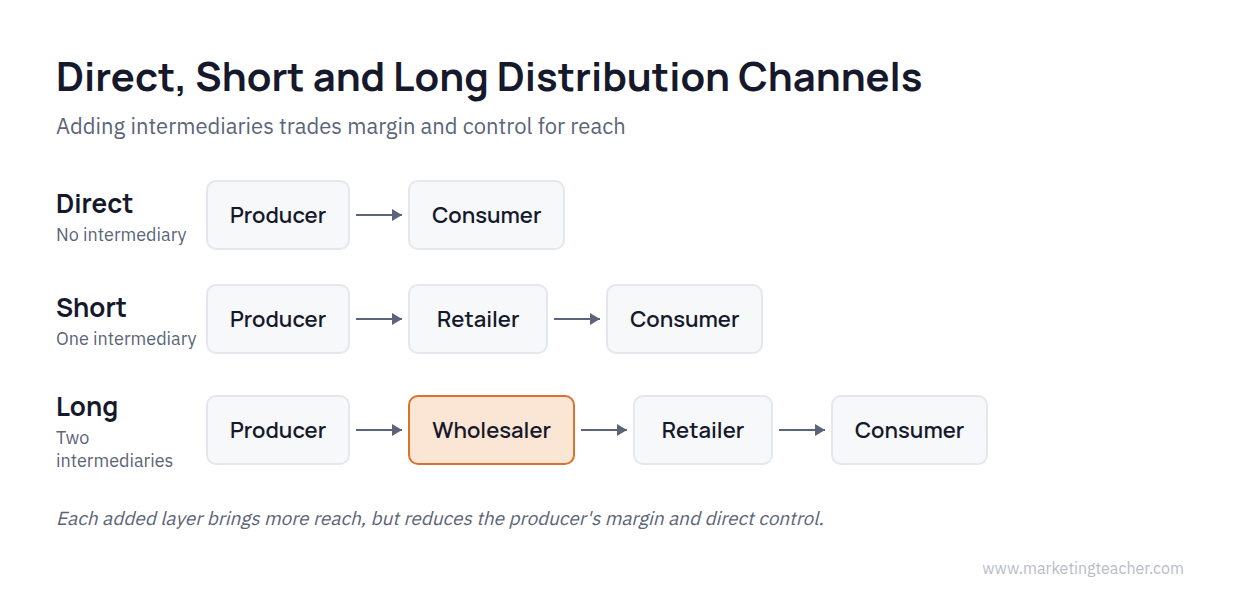
Channel Length: Direct or Indirect?
Colorado Ricardo currently runs a zero-level (direct) channel: the bike moves straight from the factory to the customer with no intermediary in between. Kotler and Armstrong (2018) describe how adding intermediaries – a one-level channel through independent retailers, or a two-level channel through a regional distributor as well – extends a manufacturer’s reach at the cost of giving up some control over how the product is sold.
Distribution Intensity: Intensive, Selective or Exclusive
An intensive strategy would put the e-mountain-bike into as many outlets as possible; an exclusive strategy would tie it to a single partner in each territory; a selective strategy sits between the two. For Colorado Ricardo, selective distribution through a small, carefully chosen set of independent bike shops in neighbouring states (Utah, Wyoming, New Mexico) is the better fit: it builds real reach beyond Colorado while keeping enough control over how the bike is presented to protect the hand-built, premium story that low-margin, high-volume sporting goods chains would dilute.
Why Use an Intermediary At All?
A channel decision cannot be made in isolation from price and target segment – see the Pricing Strategies and Segmentation exercises for how those choices interact.
The slides, worksheet, lesson plan and poster for this lesson are free to download and free to use in your course — no sign-up, no permission needed. See the teacher resources →
Assign this lesson to your class:
Using Canvas, Blackboard or Moodle? Copy the link and paste it into your course page or assignment. More ways to add lessons to your LMS.

